Structural analysis engineer who released fighter aircraft components across three generations on Turkey's KAAN program
My work covers static strength analysis of composite and metallic structures, load path engineering, joint analysis, and concept studies. I also develop automation tools that serve 200+ engineers.
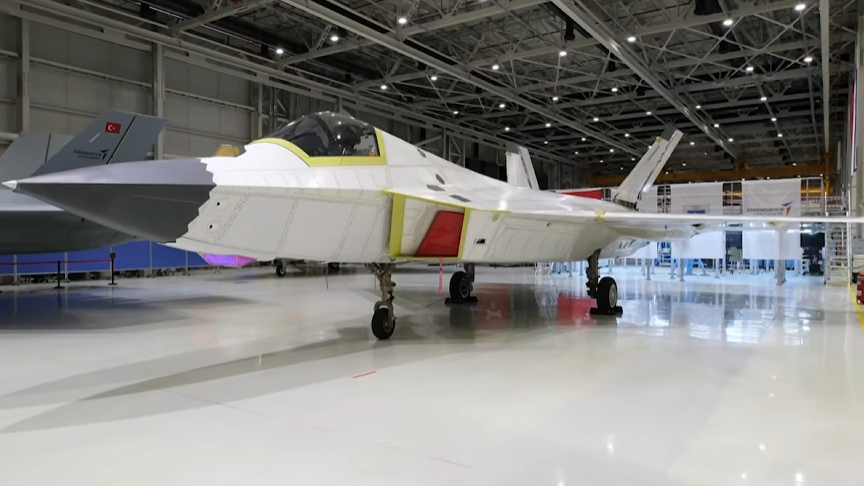
I am a Senior Structural Analysis Engineer at Turkish Aerospace, working on the TF-X (KAAN) 5th-generation fighter aircraft program. Over the past 5+ years, I have performed static stress analysis, joint analysis, sizing, and concept studies for composite and metallic center fuselage structures across three aircraft generations (P0, Block 0, Block 10).
Recognized as the top-performing engineer among 100+ analysts in two consecutive years, I bring deep structural mechanics knowledge and apply it to build automation tools that streamline structural analysis workflows. Those tools now support 200+ engineers and save an estimated 17,000+ engineering hours annually through model preparation, analysis, and communication of sizing results.
These tools address real engineering challenges; mapping properties between mesh configurations, calculating fastener stiffness, filtering 100GB+ datasets, and generating interactive stress reports.
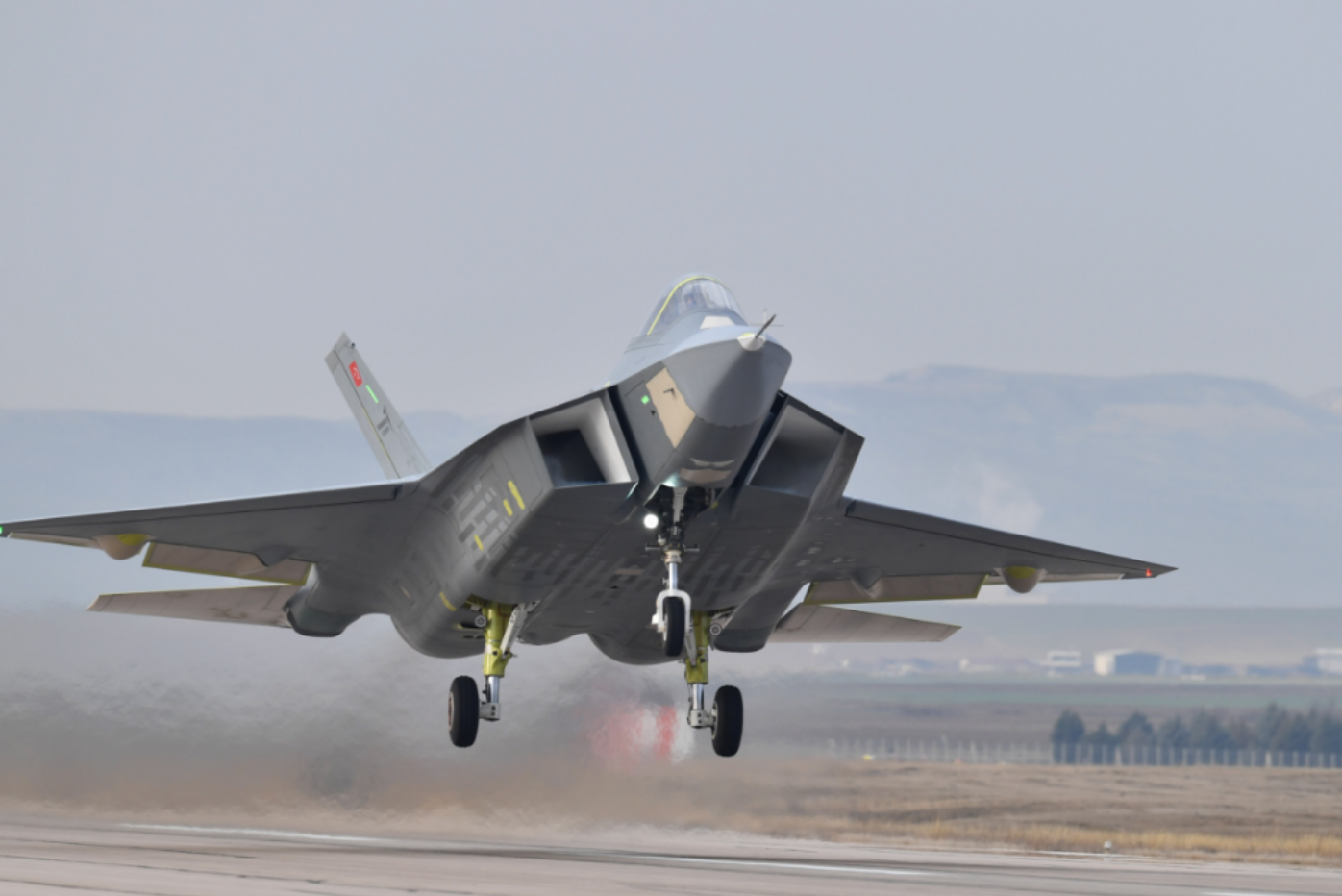
Performed structural sizing and stress substantiation on center fuselage structures across all three KAAN generations.
First Flight – 21 February 2024
In Production
Released – Awaiting Production
Key structural analysis domains where I have delivered substantive engineering work.
Redesigning load paths in metallic and composite center fuselage structures through GFEM and DFEM-based design iterations—evaluating hundreds of design alternatives with straps, tension fittings, different materials, sizings, and new structural members to improve strength, reduce weight, and account for manufacturability.
Bolted joint analysis for both composite and metallic structures—pure bearing, pure bypass, bearing/bypass interaction, pull-through, etc.—across hundreds of joints per aircraft generation. Developed i-JAT to automate load extraction, spreadsheet-based joint sizing, and result compilation. Used by 35 engineers, it saves an estimated 6–14 hours of hands-on work per engineer per iteration.
Defining DFEM loads and boundary conditions during GFEM-to-DFEM transition, mapping forces, temperatures, and pressures, and checking equilibrium against GFEM-derived loading. Building models to run thousands of load cases.
Aerospace structural analysis expertise backed by strong automation and tooling skills.
Production-grade tools automating FEA workflows for the aerospace industry. Annual engineering-hour savings are estimates based on recurring use and hands-on work saved. Click any card for details.
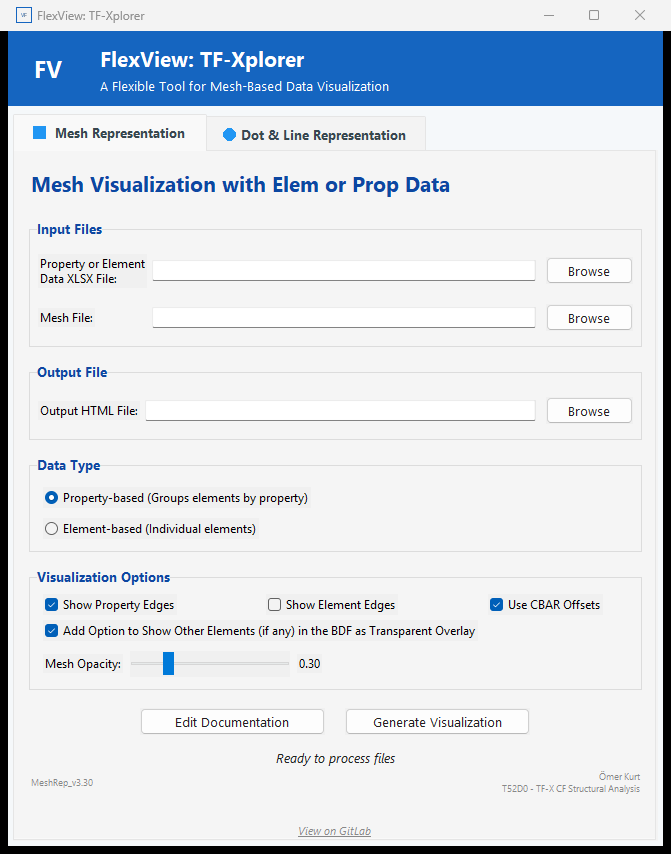
Interactive 3D mesh visualization generating S2D HTML reports. The standard data transfer method between 150+ analysis and 70+ design engineers, saving an estimated 10,000 engineering hours annually through visualization and S2D reporting.
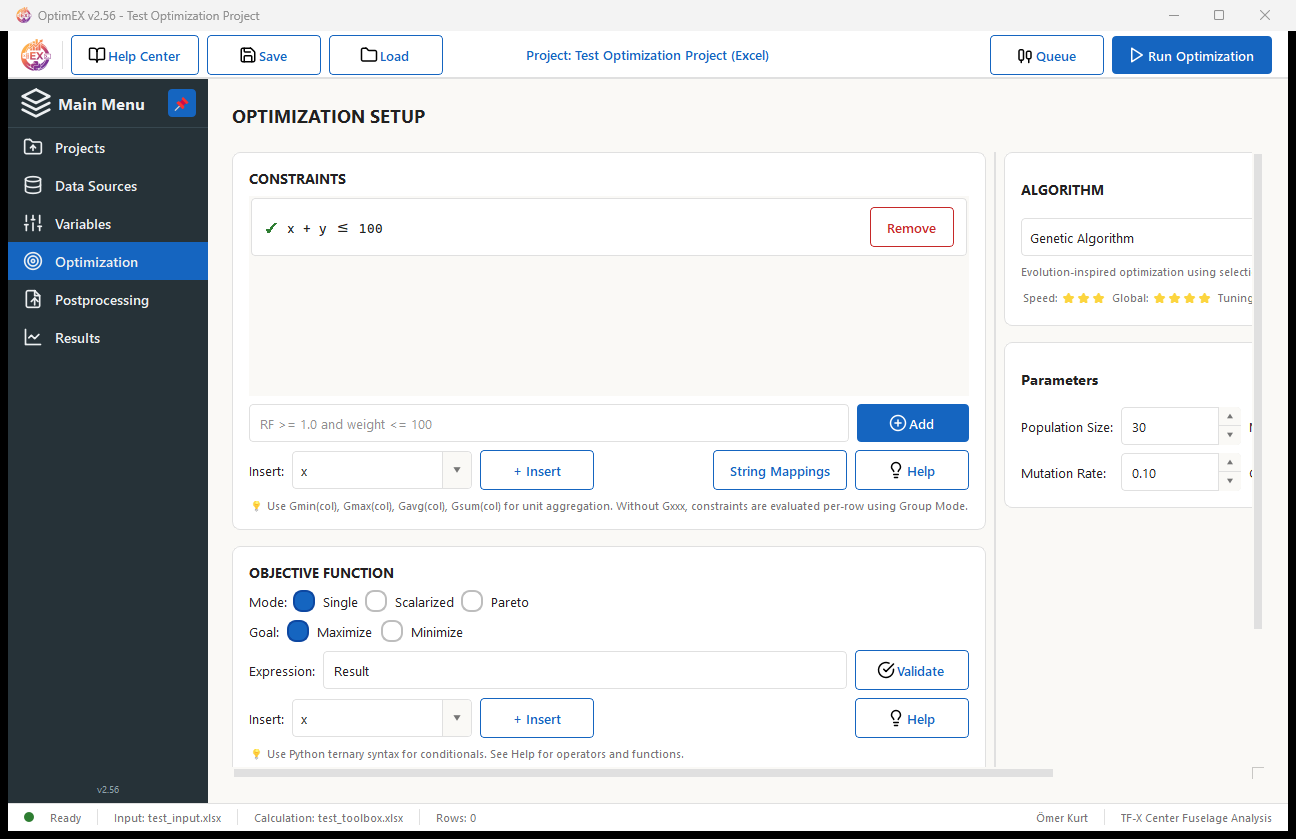
Generalized metaheuristic optimization framework using Excel, executables, or ML models as evaluators. Supports single and multi-objective optimization with 10 algorithms.
Multi-process automation orchestrating HyperMesh and Excel for end-to-end bolted joint analysis of composite and metallic aircraft structures. Used by 35 engineers, saving an estimated 4,000+ engineering hours annually.
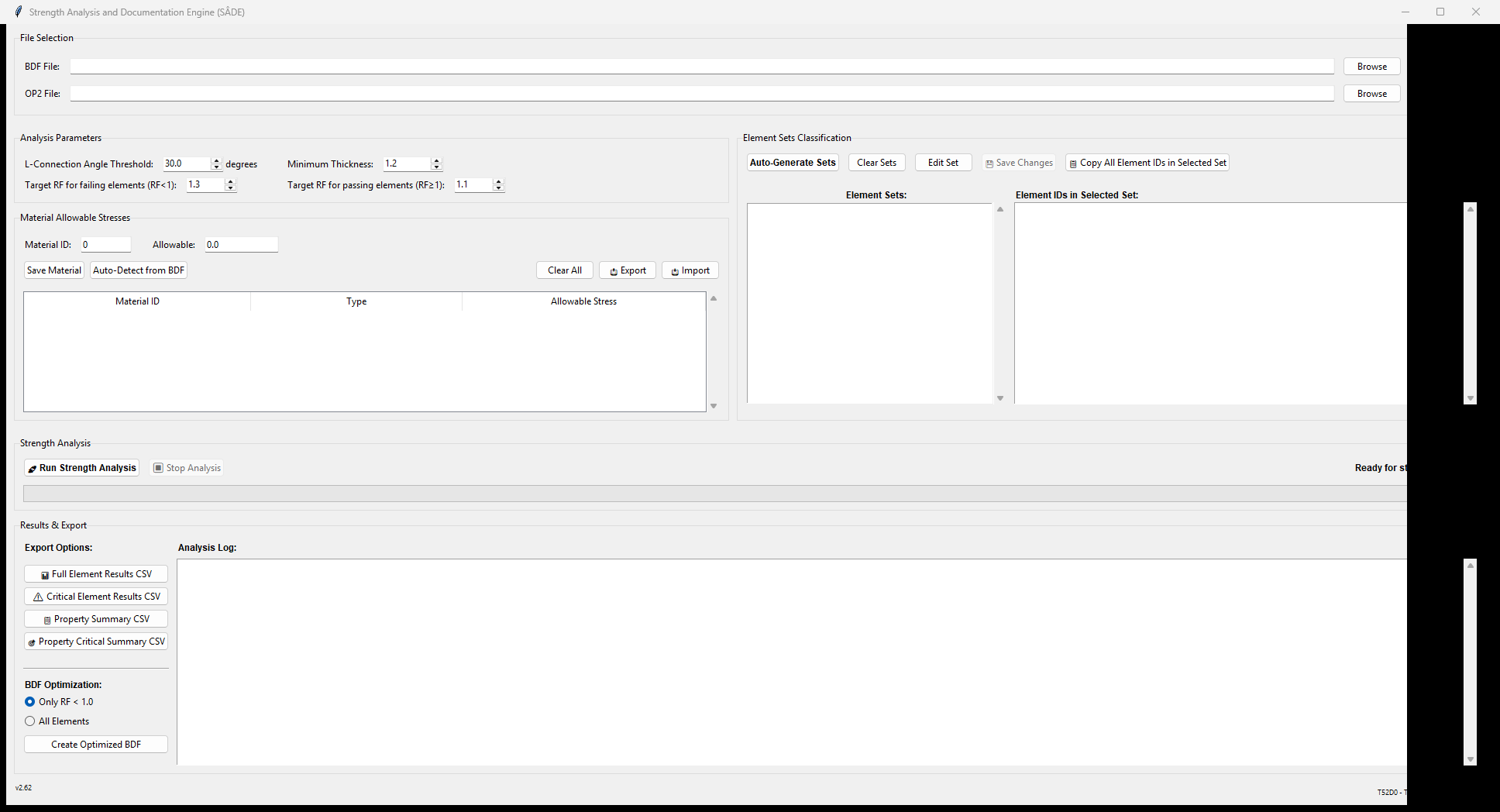
Automated von Mises strength analysis with intelligent element classification by connection type and vectorized thickness optimization. Saves an estimated 1,000 engineering hours annually.
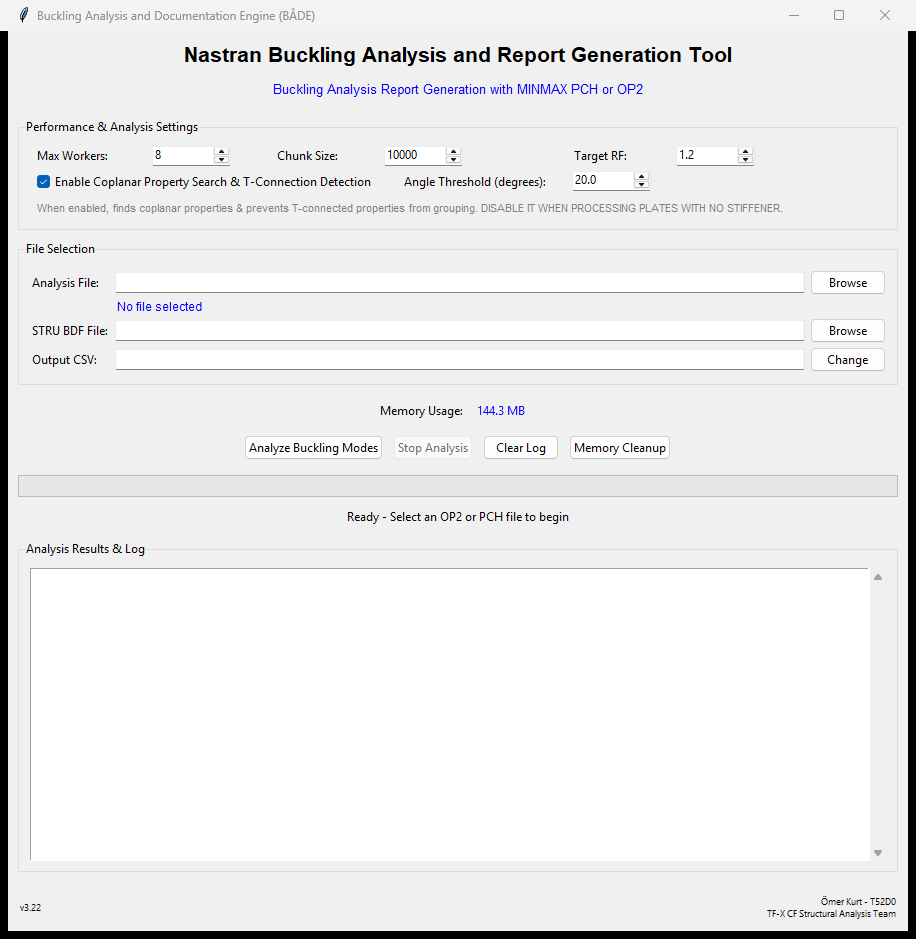
Extracts buckling mode data from Nastran results with structural connectivity analysis, coplanarity detection, and T-connection awareness. Saves an estimated 1,000 engineering hours annually.
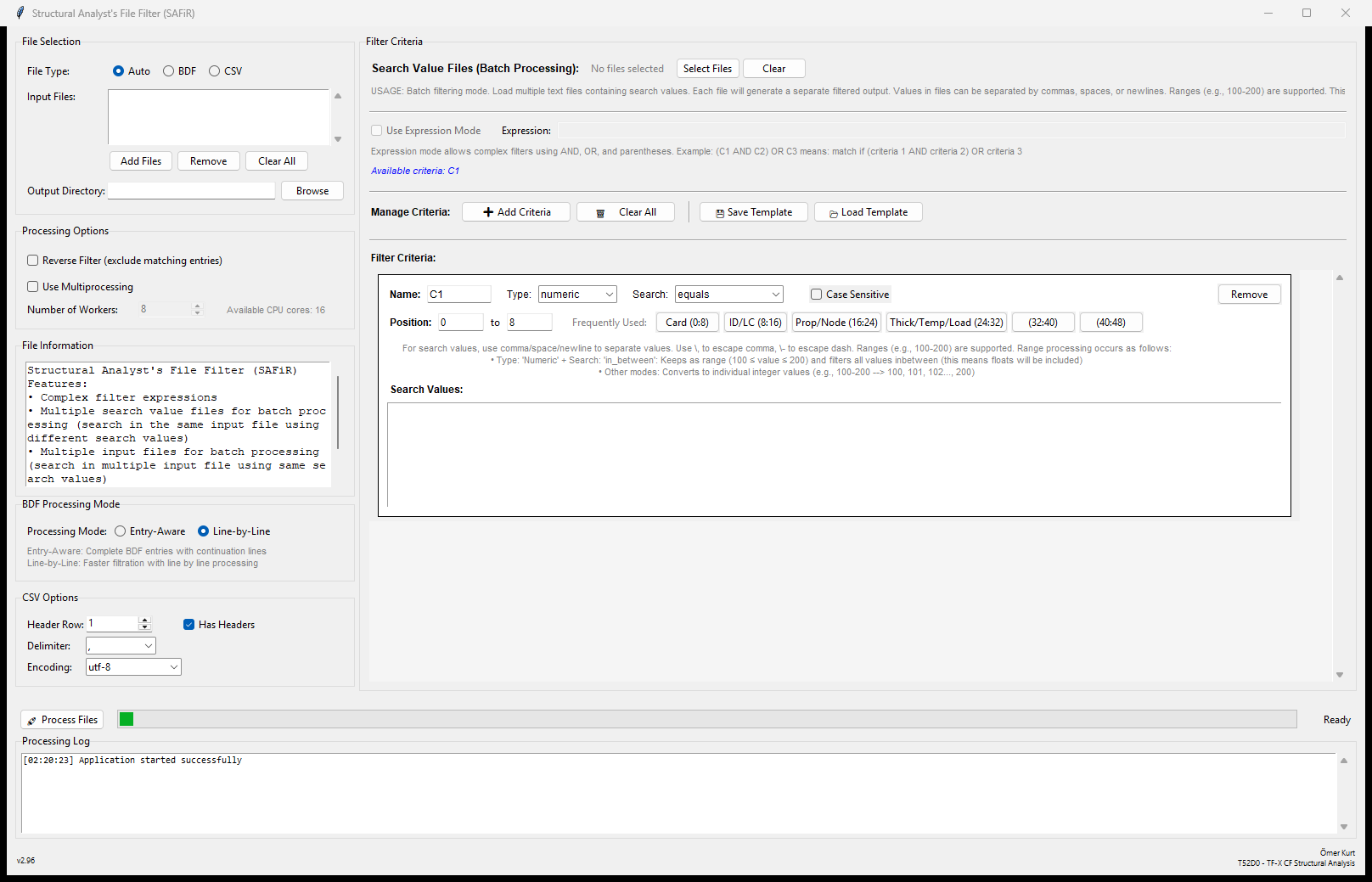
High-performance BDF/TXT/CSV filtering with streaming architecture for 100GB+ files, entry-aware processing, and complex Boolean expressions.
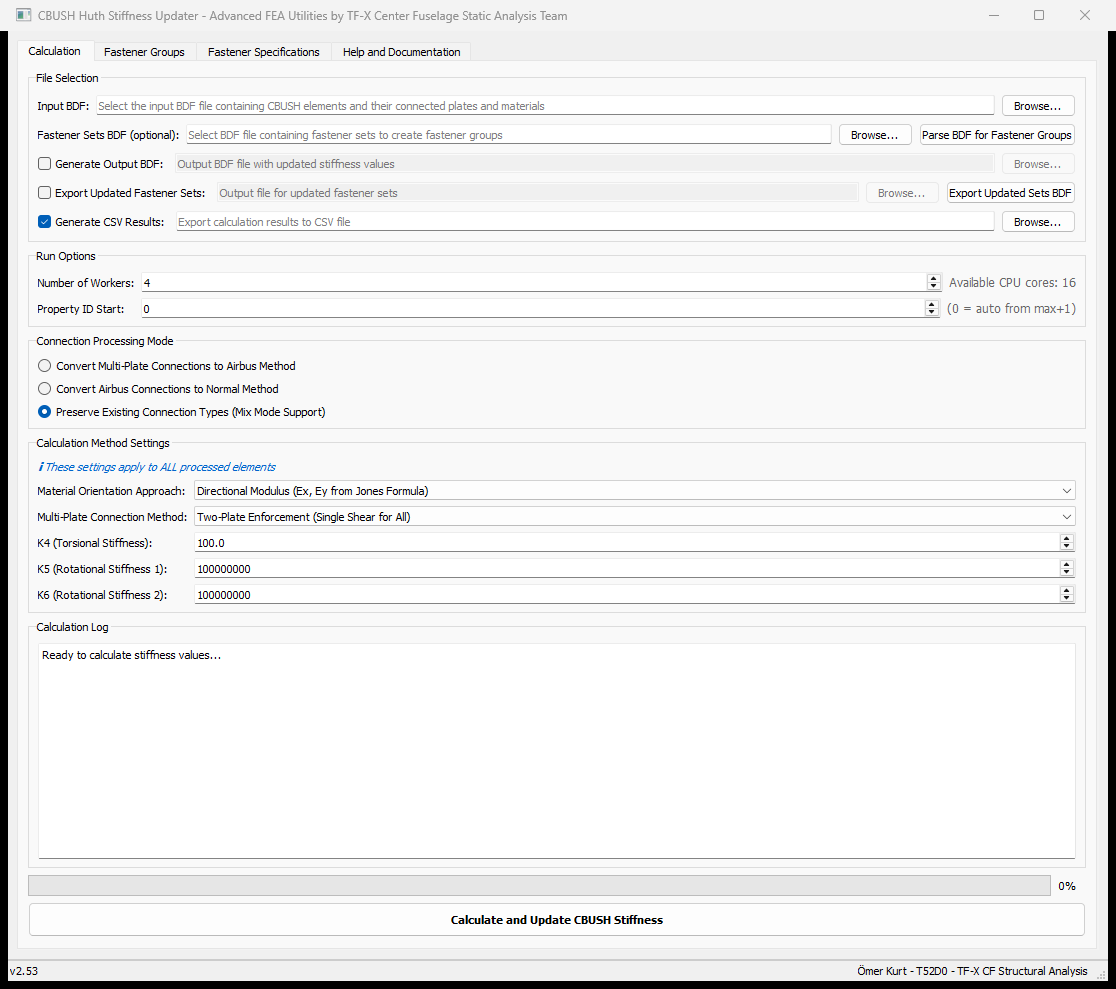
Calculates CBUSH fastener stiffness using the Huth formula, featuring support for CLT-based composite materials, multi-plate analysis, and the dual-CBUSH method.
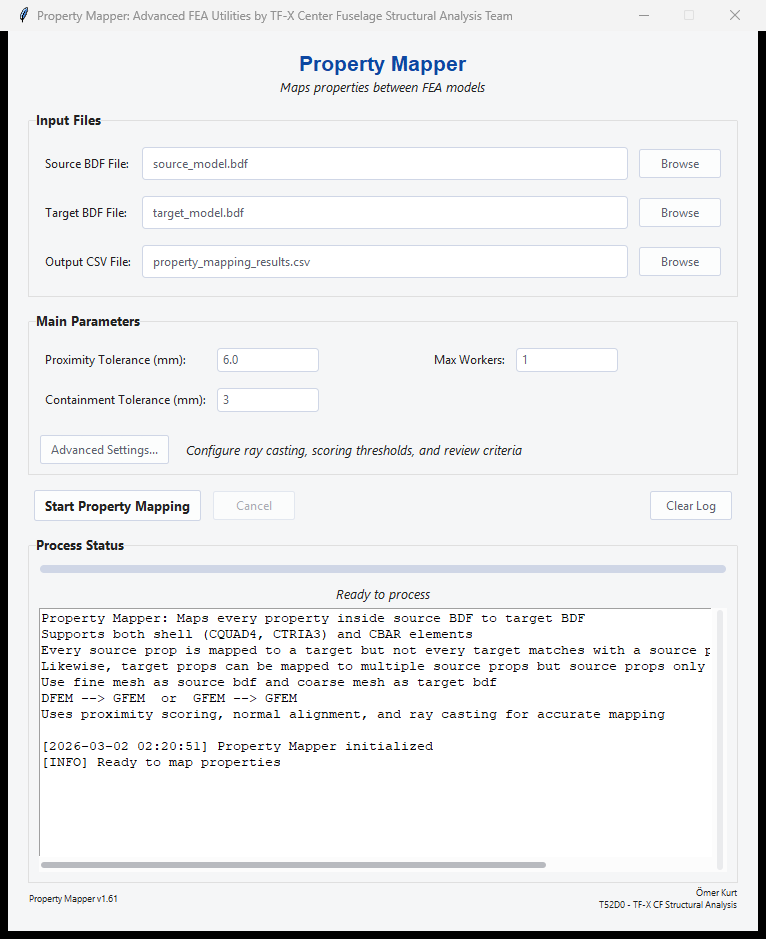
Intelligent property transfer between FE meshes using proximity analysis, surface normal alignment, and ray casting with 5-level confidence assessment. Saves an estimated 480 engineering hours annually across 20 engineers.
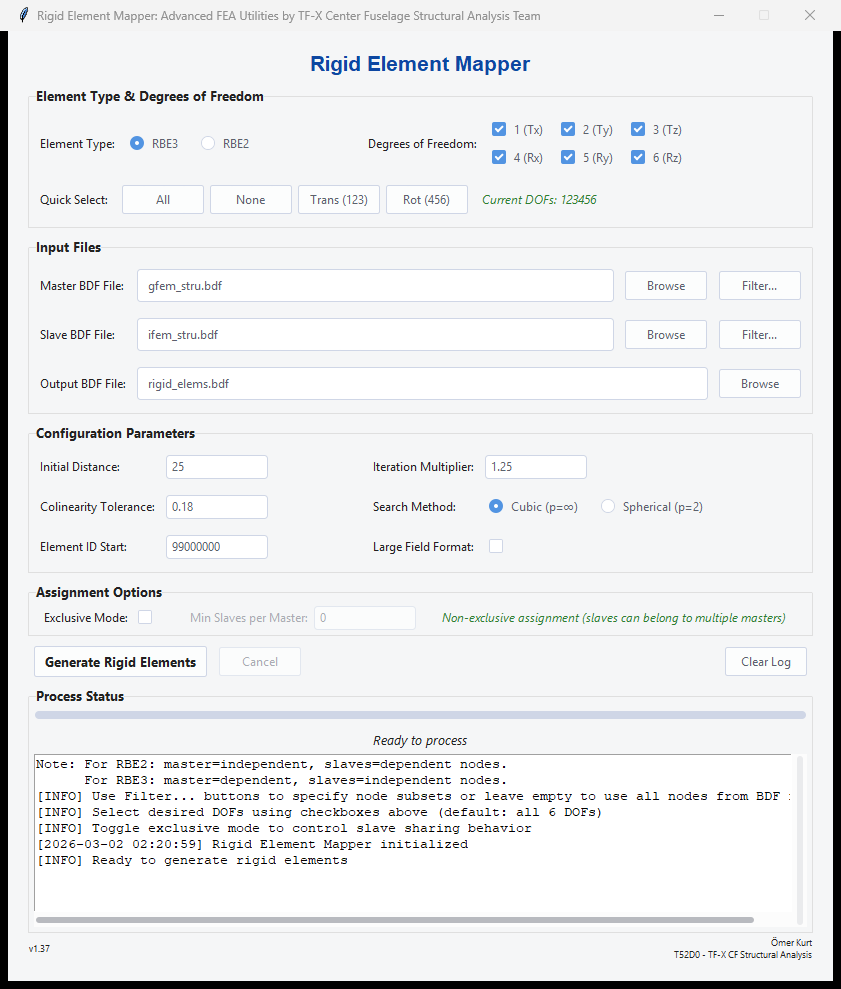
Automatically generates RBE2/RBE3 rigid body elements with spatial algorithms, exclusive assignment modes, and colinearity detection. In a representative RBE3 generation case, reduced processing time from about six hours with my earlier TCL script to about ten seconds.
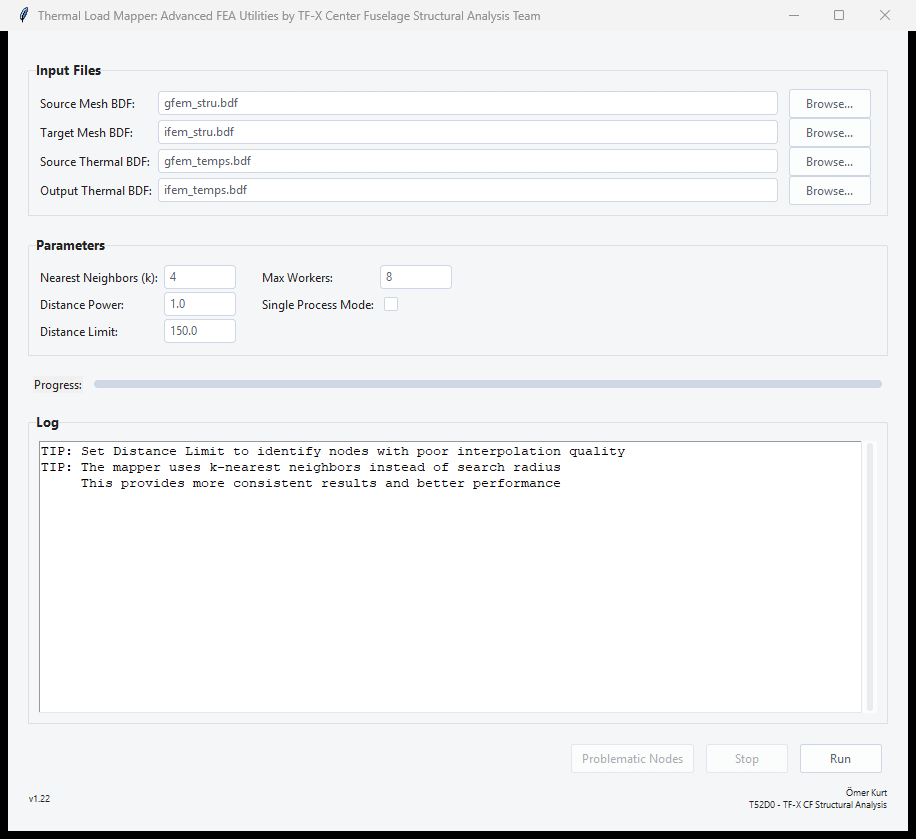
Maps thermal loads between different FE meshes using KNN interpolation with inverse distance weighting for coupled thermal-structural analysis, shortening the wait for mapped temperature loads.
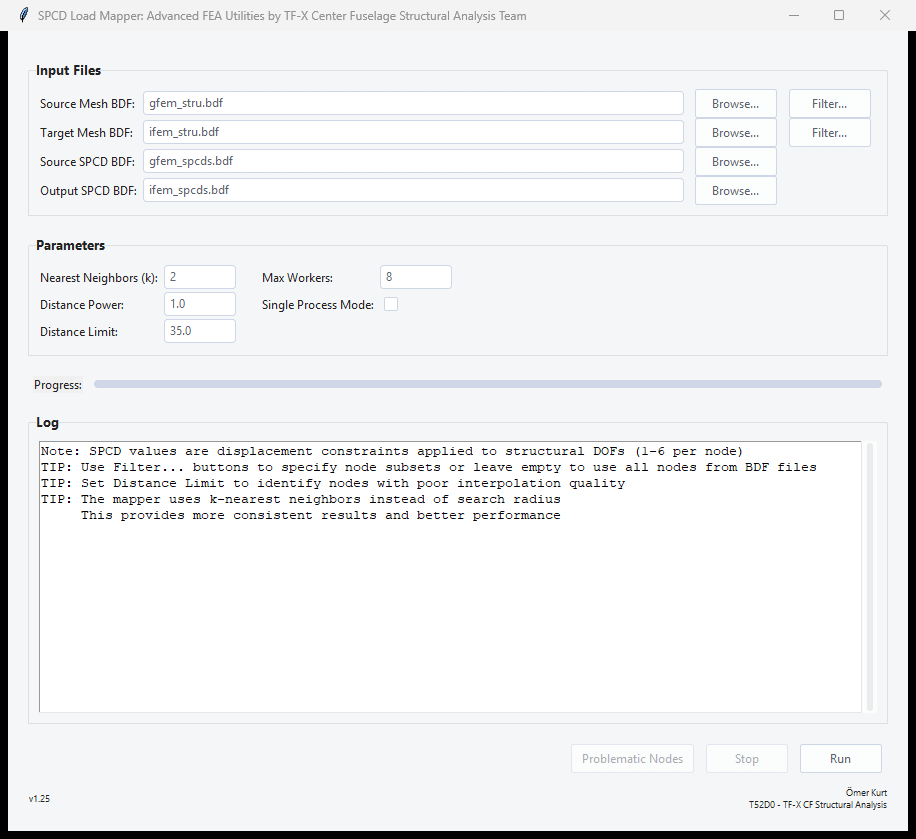
Interpolates prescribed displacement loads between meshes, preserving load case structure and DOF definitions for boundary condition transfer.
Comprehensive HyperMesh plugin with 75+ procedures for FEM model preparation, fastener modeling, quality checks, and analysis setup. Saves an estimated 1,200 engineering hours annually across 50 engineers.
Building aircraft structures and the tools to analyze them.
Turkish Aerospace – TF-X (KAAN) 5th Generation Fighter Aircraft
Turkish Aerospace – Satellite Structural Testing
Mechanical Engineering
Thesis: Graph Neural Networks as Surrogate Models for Structural Analysis: A Study
on Buckling Behavior
View Repository
Mechanical Engineering
CGPA: 3.68 / 4.00 – Ranked 1st in class